
8B) CORSIA: A market-based approach
- Yusuf Khan-Cheema

- Jun 19, 2020
- 3 min read
Updated: Jul 5, 2020
I hope last week’s post emphasised the difficulty of decarbonising aviation. The industry’s aim of carbon neutral growth by 2020 simply cannot be achieved with energy efficiency improvements alone. The 'solution': A Carbon Offsetting and Reduction Scheme for International Aviation or CORSIA for short.

As the first global carbon-pricing mechanism adopted by any industry, CORSIA is being hailed as the solution to rising emissions in a sector that has previously evaded legislation on climate change. It requires international airlines to report their annual CO2 emissions in 2019/20 and purchase carbon offsets for any increase in their emissions above 2020 levels [UPDATE: due to the significant impact of coronavirus on aviation, emissions from 2020 are being excluded from the reporting process]. This will eventually become mandatory between 2027-2035, requiring around 165 million tonnes of CO2 to be offset each year (equivalent to the annual emissions of the Netherlands)!
Note, CORSIA does not cover domestic flights (which are included in each country's climate change pledges as part of the Paris agreement) nor commercial flight operators whose annual emissions are below 10,000 tonnes of CO2 such as those from private jets.
So for those of you who aren't fluent in aviation jargon or the world of carbon offsetting, what does all of this mean? Offsetting is essentially a way for airlines to compensate for their emissions by investing in schemes that reduce (renewable energy) or store (planting trees or afforestation) our carbon emissions. SAFs (sustainable aviation fuels) can also contribute towards airline emission-reduction efforts, but as I mentioned last week, there are significant limitations to these.
However, although this 'one size fits all' approach has been seen as a crucial step to address growing emissions from international flights, not everyone is happy. Developing countries such as China and Russia have opted out of the voluntary pilot phase starting in 2021 for two reasons. First, it puts a disproportionate cost burden on airlines in developing countries, whose cumulative CO2 emissions are much lower than the big European and US carriers (that have been emitting carbon for much longer).

Secondly, CORSIA restricts offsetting to projects approved by the International Civil Aviation Organisation. This is to ensure offsetting produces irreversible decreases in emissions that would not have otherwise occurred without investment from airlines or passengers. For example, the European Commission found that 85% of offset projects offered by the UN’s Clean Development Mechanism would have gone ahead regardless of investment. The ICAO must therefore provide sufficient, quality-assured projects, avoiding ‘double counting’ whereby airlines purchase carbon credits already being used to reduce a country’s emissions. One must also consider: whether there is a delay between carbon credits being purchased and the actual reduction of emissions; and how the decreased albedo (meaning more heat is absorbed at the earth's surface) and volatile organic compounds from pesticides can counteract the reductions in emissions from forestry projects.
So why do China and other developing countries disagree with this aspect of CORSIA. Well, they feel they should be able to decide which offsetting projects are eligible rather than the ICAO deciding for them. The majority of airlines, however, believe this would give carriers in developing countries where the cost of offsetting is lower (for example, Brazil, China and India) a competitive advantage over others. At the end of the day, airlines are businesses looking to make a profit and a market-based approach (putting a cost on carbon emissions) will inevitably benefit some airlines more others.
And this is ultimately the downfall of CORSIA. As the world's fastest growing - and soon-to-be the world's largest - aviation market, China's withdrawal from CORSIA is a significant blow to the scheme. Accordingly, around one quarter of emissions from international aviation still remain unaccounted for, with only 87 out of 193 countries currently participating in CORSIA.
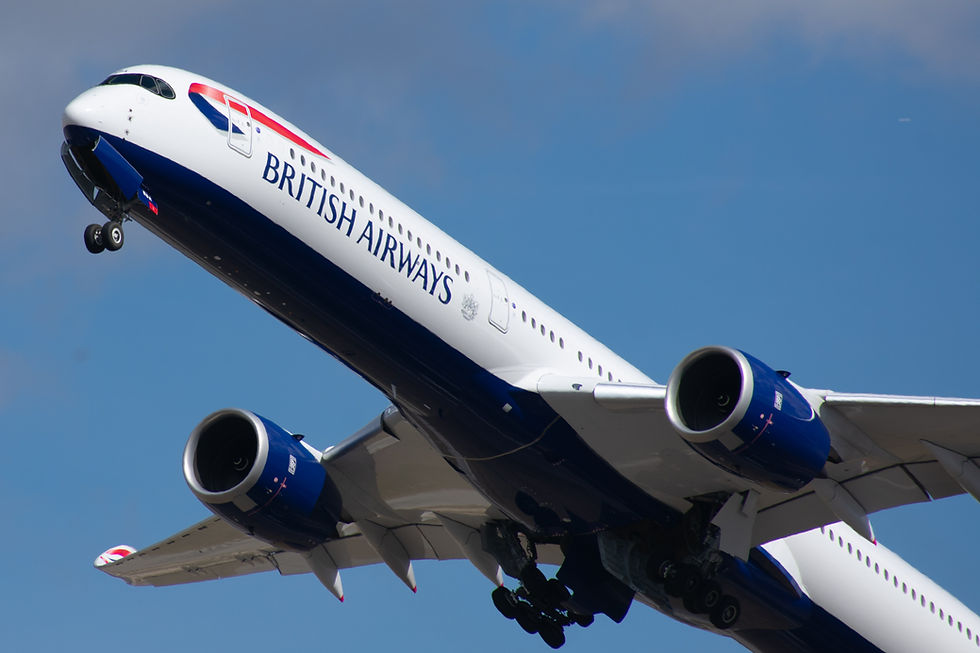
At the start of this blog, you may have noted that I used the term 'solution' tentatively when describing CORSIA. Unlike in the shipping sector, which set itself a target to halve its emissions by 2050 (relative to a 2008 baseline), CORSIA fails to provide a long-term solution to actually reducing emissions; it simply limits emissions growth, a subtle but important difference for our climate. One could also argue that offsetting legitimises unsustainable growth within the aviation industry. It allows airlines to continue damaging our environment whilst shifting the burden of emission-reductions to other economic sectors. Airlines including British Airways and Easyjet have recently implemented temporary offsetting measures to deliver carbon-neutral flights. But is this aimed at reducing their environmental impacts or simply appeasing worries of flight-shame? More on this next week.



Comments