
7A) Cabin waste
- Yusuf Khan-Cheema

- May 22, 2020
- 3 min read
Waste has become ubiquitous in our consumer society where a philosophy of take-make-dispose dominates. Although aviation is only a small part of the problem, there is still a long way to go to reduce - if not eliminate - waste within the industry. Over the next few weeks, I will therefore delve into issues with in-flight waste (particularly plastics), your sewage and even my own rotting body. Some of you may already be thinking that this completely misses the bigger issue of whether people should be flying at all, but I'll get onto that in a later post.
So let's get straight to it. As you begin to relax with a movie, you remove your blanket and headphones from their plastic covers and tuck-in to your meal served in plastic containers with plastic cutlery. Afterwards, you might freshen-up with complimentary, plastic toothbrushes and other toiletries served in plastic containers. You get the picture, right?

Single-use plastics (SUPs) are all-around you when flying, but these recyclables constitute only 17% of all waste produced; the average passenger travelling through Heathrow in 2012-13 produced 1.43kg of cabin waste, comprising of untouched food (23%), sewage and other non-recyclable waste. Research at Indian airports even suggests that up to 60% of in-flight paper, cardboard and plastic waste could be recycled, so why isn’t it?
In order to minimise the spread of disease within their agricultural sectors, countries implement strict regulations on the reuse or recycling of foreign food or packaging, even if it’s untouched or comes from a country with stringent food hygiene standards. Consequently, 90% of Heathrow’s waste is incinerated or sent to landfill, quite an alarming figure considering the growth of re-use and re-cycling practices around the world. Although both these disposal methods ensure SUPs from aviation are unlikely to contribute to the growing marine plastic problem, they do however, release harmful greenhouse gases and pollute surrounding water bodies (which arguably isn't much better).
With aviation waste predicted to double by 2030 from 6.1 million tonnes in 2018, the need to address waste management issues within the industry has never been greater. Many airlines are attempting to reduce their reliance on SUPs; Qantas completed the first landfill-free flight between Sydney and Adelaide earlier this year using biodegradable meal containers made from sugarcane, digital boarding passes and removing individually-packaged milk pots amongst other methods. Design firm, PreistmanGoode, has a particularly interesting take on the future of in-flight meals:
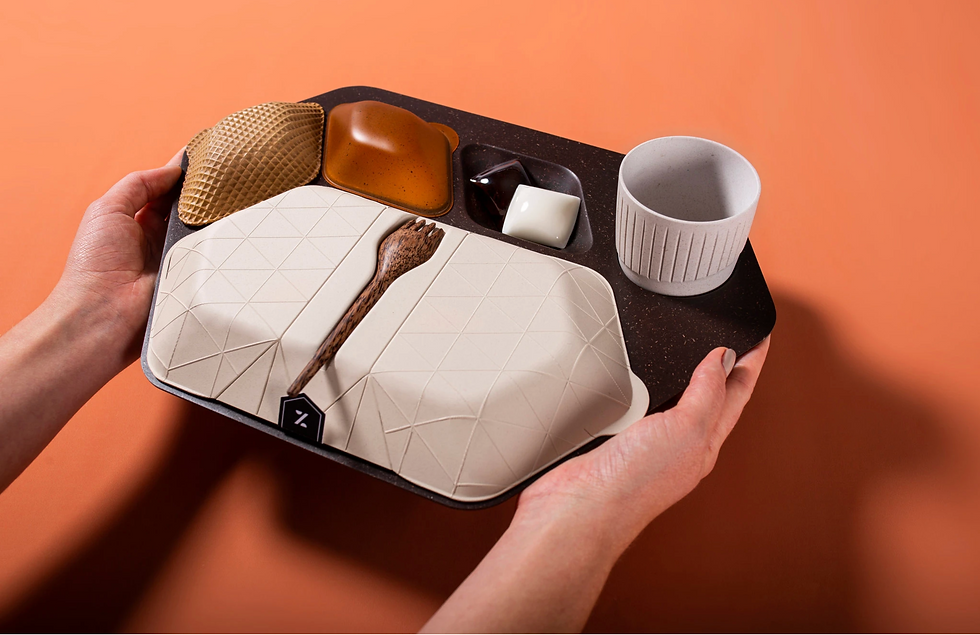
Although more sustainable, these may not be viable alternatives to a problem costing the industry £400 million/year: glass and crockery weighs more than the SUPs they replace, resulting in greater fuel burn and in-flight emissions; whilst biodegradable trays and edible food containers come at great expense to airlines and so are unlikely to be widely adopted.
Progress is also constrained by the lack of coordination between airlines, airports and local authorities. For example, San Francisco airport has control over the waste produced by restaurants and businesses within its boundaries but not over airlines and the type of plastics they use (which may not be compatible with local authority disposal facilities). A somewhat bigger issue is what I mentioned earlier about the control on international catering waste, which sees - often untouched - food and containers burnt or dumped in landfill sites because different countries have their own food safety standards. Although I have no idea what the solution is, it is clear that greater collaboration within my family and between different countries is required to tackle this issue of cabin waste.


Comments