
6) My stomach's rumbling
- Yusuf Khan-Cheema

- May 15, 2020
- 2 min read
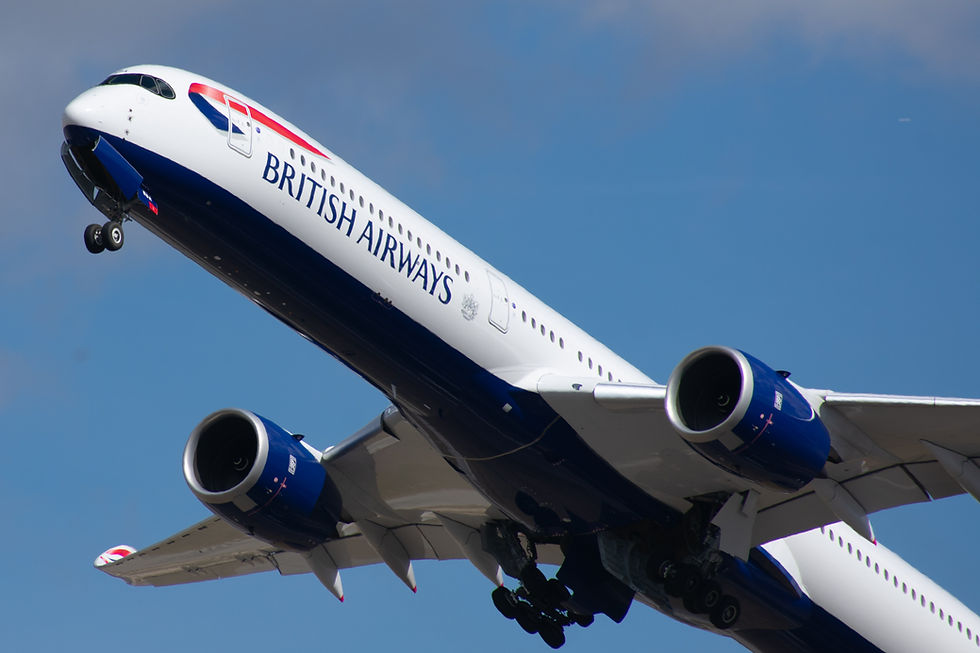
Whilst you’ve been filling your stomach at 38,000ft, my belly has been full ever since we left. Many people don’t realise I can carry two truck-loads of cargo, even with over 400 passengers; this increases five-fold when you take my freight variant, the 747-400F. In fact, over a third of cargo transported by air is right beneath your feet on your typical passenger flights.

Although only 1% of global cargo volume is transported by air, this represents ‘35% of world trade by value’. Air cargo is crucial for temperature-sensitive (perishables including fresh fruit and flowers), time-sensitive (mail, humanitarian aid) and high-value (pharmaceuticals, gemstones) goods. In our increasingly globalised world, air cargo has continued to prove essential even amidst the pandemic. However, my cargo is more environmentally damaging than other modes, emitting 29 times the CO2/km of rail and 30-150 times that of shipping; the impact of air cargo increases even more when you consider those non-CO2 impacts I mentioned in this post, the energy consumed to refrigerate perishables and surface transportation required to complete the supply chain.

My belly also facilitates illegal wildlife trafficking through air freight and checked baggage in particular. Earning between $7-23 billion per year, criminal organisations harness the greater interconnectivity I bring to transport ivory, rhino horns, reptiles and birds, with Kenya & UAE major transit points between black market hotspots in Africa and Asia. Whilst 7,000 plants and animal species are impacted by trafficking, elephant, rhino and pangolin populations are declining rapidly with 45,000kg of ivory (elephant tusks) , 23,000kg of pangolins and 2000kg of rhino horns seized between 2009-2017. Illegal bushmeat trade is also an issue; in Switzerland, an estimated 500-1500 tonnes of illegal bushmeat – including pangolin, primates and other species controlled by the Convention on International Trade in Endangered Species – arrives annually via air travel.


And this only represents a fraction of total trafficking. Despite many airlines signing the Buckingham Palace Declaration to raise awareness amongst employees and customers of the scale of illegal trafficking, enforcement is still lacking; discreet monitoring of the screening process used in US airports highlighted a 95% failure rate. Evidently, greater control over the things I transport is required.


Comments